AddThis

1/1/06

The Self Is A Conceptual Chimera


John Allen Paulos says this about the self: "Doubt that a supernatural being exists is banal, but the more radical doubt that we exist, at least as anything more than nominal, marginally integrated entities having convenient labels like "Myrtle" and "Oscar," is my candidate for Dangerous Idea.

11/9/05

Non-Duality’s No-Self and Antonio Damasio

Antonio Damasio No-Self Non-Duality Zen Descartes' Error
Non-Duality’s No-Self and Antonio Damasio

Non-Duality is the term for a view of the world as not two, but one—not the duality of a person and the world outside him or her, but instead a subjective experience in which the perceiver and the perceived participate with one another in a sense, according to some experiencers, that all is part of incessant movement, a dance, so to speak.

7/22/05

David Chalmers’ Hard Problem of Consciousness


Although called the father of modern philosophy, René Descartes became challenged in the last century for the split he created between body and mind, the mind-body dualism, or subject and object. For him, body became one thing; mind, another. This presents a problem. Why? Hold out your hand. Open the fist. Now close it. How did the gap get bridged between your hand, the object, and mind, the subject, if the two are split?

7/18/05

Benjamin Libet's Personal View of Free Will


"If the moon, in the act of completing its eternal way around the earth, were gifted with self-consciousness, it would feel thoroughly convinced that it was travelling its way of its own accord on the strength of a resolution taken once and for all.

6/30/05

Leaps of Faith


St Augustine said, "I believe because it is absurd." William James, Charles Sanders Pierce, and Miguel Unamuno, among many others, held that the abandonment of reason is acceptable under certain circumstances. Such a situation is allowable when an issue is of extreme importance to human existence and when rational or empirical evidence is inconclusive one way or the other. These philosophers held that such a position is also acceptable regarding the free will/determinism issue, although the preponderance of scientific evidence weighs in for determinism despite our sense of free will and decision. Former Scientific American editor, Martin Gardner takes this view with regard to his belief in God. (Among his books are The Ambidextrous Universe, Weird Water & Fuzzy Logic, The Annotated Alice, The Emperor's New Mind, and Are Universes Thicker Than Blackberries?)

4/14/05

Free Will & Consciousness Research: W. Grey Walter, Benjamin Libet, Hans Kornhuber, Lüder Deeke, and Risto Näätäen


Benjamin Libet Hans Kornhuber Lüder Deeke Risto Näätäen W. Grey Walter Maxwell Maltz Free Will
Benjamin Libet is most frequently associated with the Readiness Potential and its implications for free will, but W. Grey Walter (1910-1977), did pioneering work that brought early attention to the phenomenon in Britain and America, although similar findings had been made in Germany and later in Finland.


W. Grey Walter: Background

Born in Kansas City, Missouri, he lived in England from the age of five, and became interested in neurophysiology at King's College, Cambridge.

6/24/04

Wilder Penfield, Brain Maps, V.S. Ramachandran and Phantom Orgasms: The Man Who Mistook His Foot For A Penis


Canadian neurosurgeon Wilder Penfield performed pioneering experiments in the 1940s and 1950s. During extensive brain surgeries, he applied electrodes to different regions of the brain and stimulated them. He then asked patients what they felt.

6/22/04

A Phantom Arm and A Bizarre Experience


My right leg seems trapped in time and space, at a day and place long ago. Along the leg runs a large scar that always tingles in the background of my consciousness, and which tightens into fear whenever I focus attention there.

6/18/04

Blindsight: Graham Young Is Blind But Can See

Blindsight: Graham Young Is Blind But Can See

What is consciousness? You may say that it is to be aware. But what does it mean to be consciously aware of something? I can type this paragraph while outside my window a bird chirps, shadows dapple the window ledge, and here, inside, my fingers move on the keyboard, music plays on the radio, and so many other events also happen as I focus only on these words. I stop for a moment, and there they are, all these other things. Then I return my attention to the computer screen. In a sense, I see but I don't see. I am aware but I am not aware. Things are part of conscious and, so to speak, they are not.

Graham Young of Oxford, England is a case in point.

6/9/04

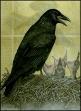
Bird Brains and Theory of Mind


Humans are exceptional beings, so we like to think. The so-called lower animals lack complex syntax for language. They simply are not as conscious. Many philosophers believe only humans understand that others have their own personal thoughts, which philosophers term as having a theory of mind, without which we would lack our empathy and deception. So goes the point of view. Theory of mind has implications that reach far into our notions about consciousness.